Fuel prices in Kosovo near 2 euros, market remains uncertain for the days ahead
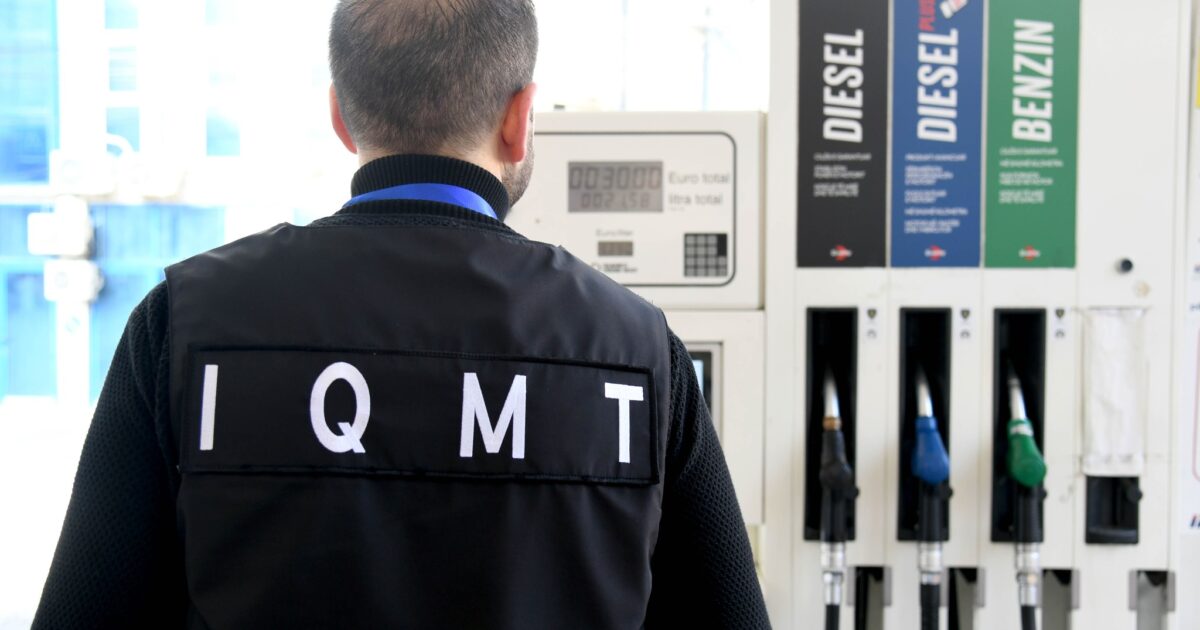
Fuel prices in Kosovo remain high, with a liter of diesel selling for up to 1.97 euros. Experts warn that movements in international markets and tensions in the Middle East could push prices even higher.
Fuel prices in Kosovo continue to stay at high levels, while developments in international markets are creating uncertainty about how they will move in the days ahead. According to fuel expert Fadil Berjani, a liter of diesel is currently selling for around 1.95 to 1.97 euros, while gasoline costs about 1.65 euros per liter.
Berjani says that, under current circumstances, it is difficult to predict how prices will move in the days ahead, because of the large movements in international markets and oil exchanges. “Fuel prices are approximately: diesel 1.95 euros, gasoline 1.65 euros. We cannot predict what prices we will have in the days ahead, because there are large movements in international markets and on the exchange. And the tense situation in Iran is reflecting in these prices.”
The rise in fuel prices has brought back into focus the fiscal burden included in the price consumers pay at the pump. In the past year alone, excise duty and Value Added Tax (VAT) on fuel brought more than half a billion euros to Kosovo’s budget — around 360 million euros from excise and 157 million euros from VAT. With prices rising, oil industry representatives and businesses have asked the Government to temporarily give up part of these revenues to ease the burden on consumers. However, it remains debatable whether a tax cut would automatically be reflected in lower prices at the pump.
The Kosovo Chamber of Commerce and Industry has asked for government intervention, arguing that rising fuel costs affect more than just drivers. According to the Chamber, higher fuel prices raise business costs and may later be reflected in the prices of products and services. “The increase in fuel prices has had a major impact on the continued rise of consumer prices, construction costs and production prices.” One reason for the lack of intervention may be the weight that VAT and excise carry in budget revenues. “The Chamber has officially sent its requests for relief measures to the Government, the Ministry of Finance and the Ministry of Industry, Entrepreneurship, Trade and Innovation.” The Ministry of Industry, Entrepreneurship and Trade said days ago that it is closely monitoring the market, while Minister Mimoza Kusari-Lila says the cause of the increase is developments in the Middle East. Kusari-Lila said the decision setting the maximum price had been lifted because the deadline set in the administrative instruction had been exceeded. “The reason for lifting the decision setting the maximum price was exceeding the deadline in the administrative instruction that sets the maximum price — a deadline which was 90 days, while we had set the maximum price for 150 days, seeing the importance and weight of this decision.” According to her, the price increase was influenced by developments in the Middle East, not by changes in the domestic market. “The price increase did not occur as a result of lifting the setting or determination of the maximum price, but came as a result of the deterioration of the situation in the Middle East, the continuous attacks. All the countries of the region and the countries of the European Union are now facing such a situation, and beyond.”
The law on trade in petroleum products stipulates as a rule that prices are set by the free market, but allows intervention to protect consumers and competition, or in case of market disruptions. In early March, after prices rose as a result of the Middle East conflict, the Ministry set trade margin limits. The maximum allowed margin was up to 2 cents per liter in wholesale and up to 12 cents in retail. On September 4, the Ministry stopped setting maximum prices and the market returned to free price formation. Since then, the maximum price of fuel has risen, while current prices on the domestic market have approached the 2-euro-per-liter level again.
For every liter of imported fuel, an excise duty of 0.36 euros is paid, while VAT of 18 percent is also applied on the taxable base. The excise on imported fuel is administered by Kosovo Customs and flows into the state budget. Meanwhile, VAT is a consumption tax ultimately borne by the consumer through the price of the product. From the beginning of 2022 until September 2026, Kosovo imported fuel worth more than 2.6 billion euros. Kosovo is supplied with fuel from various countries, including Saudi Arabia, the United States, Kuwait, India, Greece and Italy. Part of the imports arrive through the region’s ports, including Porto Romano in Durrës, while fuel is also bought through companies and distributors in Albania and North Macedonia.

Komentet
Bëhu i pari që komenton!
Lini një Koment të Ri
Për t'u përgjigjur një komenti specifik, kliko butonin 💬 Përgjigju poshtë atij komenti.