The enemy within the state: How corruption becomes a threat to national security

The security measure against the head of one of the state’s most sensitive security institutions should force us to look at corruption beyond the financial bill and treat it also as a national security issue. In Albanian public debate, corruption is routinely treated as an individual moral defect, a kind of personality deviation stemming from greed, or as a form of financial parasitism that can be isolated with a few spectacular handcuffs and a few press releases.
That is too superficial a reading, because it does not take into account the multiple damages corruption causes when it becomes capillary and penetrates state institutions. At that point, it no longer only steals money from the budget, but erodes the state’s ability to perform its functions, to protect national interests and, ultimately, to guarantee the country’s own security.
In her book “Thieves of State,” scholar Sarah Chayes tries to move the discussion on corruption from the field of public morality and economic damage toward a far more troubling question, linked to the state’s ability to survive, to pursue the national interest, to exercise sovereignty and to protect its citizens.
Her experience in Afghanistan had shown her that an administration consumed by bribery, clientelism and links to crime can retain all the outward signs of institutional normality, while its fundamental functions have gradually been altered in the service of a criminalized network of beneficiaries. At that scale of penetration, corruption stops being only a matter of justice and becomes a matter of national security.
International history shows that corruption does not stay for long with tenders alone. It ends up at the border, the army, the police and foreign policy. In the Ukraine of 2014, after years of corruption and maladministration, only 6,000 of 41,000 ground troops turned out to be genuinely ready for combat.
When Russia invaded Crimea, Ukraine discovered it had an army on the organigram, but not an army capable of defending the territory. In Afghanistan, commanders embezzled the salaries of “ghost soldiers,” fuel and supplies.
When American support was withdrawn, the army disintegrated rapidly, because corruption had long destroyed its morale and cohesion. Soldiers refused to die for a state whose leaders had treated it as plunder.
The lesson of these cases is not that Albania is in the same condition as Afghanistan or the Ukraine of 2014. The lesson is that corruption weakens the state gradually and often the real damage becomes visible only when a crisis comes and institutions must prove whether they are still able to perform their function.
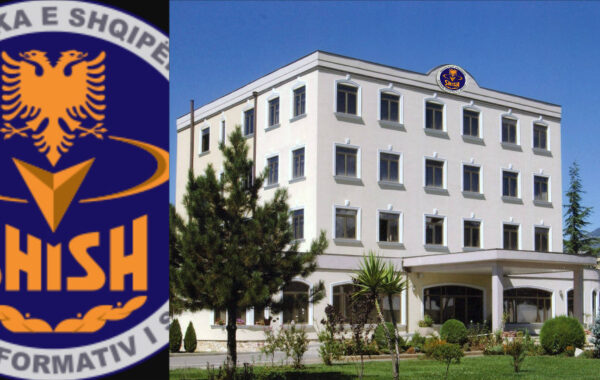
Therefore the investigation and dismissal of the head of the State Intelligence Service (SHISH) is not an isolated procedural accident, nor a romantic Spanish telenovela about a “spy,” and even less an alibi to recycle the provincial debate about her origin.
This blow comes after a chain of systematic captures spread horizontally and vertically in state institutions. Consequently the problem does not begin and end with SHISH.
Albania has seen with this leadership a fugitive deputy prime minister; a deputy prime minister accused of interfering in tenders; interior ministers involved in criminal proceedings, police leaders investigated, police officials suspected of close links to organized crime; digital infrastructure leaders under security measures, as well as informal individuals, without any constitutional mandate, who pull the neuralgic threads of executive power.
Of course, all persons under investigation enjoy the presumption of innocence and individual responsibilities are determined by the court. But, even without prejudging anyone’s guilt, the institutional scope of the investigations raises a question that cannot be avoided: what happens to national security when suspicions of corruption and criminal influence reach simultaneously the police, the digital infrastructure, the strategic ministries, the deputy premiership and the intelligence service?
Each case must be judged separately, but politically and strategically, the picture must be seen as a whole. When people chosen, appointed and protected by the same power continually end up under investigation, responsibility cannot be endlessly discharged onto “individuals who ate plums behind the prime minister’s back.”
Francis Fukuyama, in his analyses of state-building, links the strength of a state not simply to the concentration of political power, but to the capacity of institutions to implement decisions and their autonomy from private interests that try to capture them.
This distinction is essential also for Albania. A government may appear powerful because it controls the administration, parliament and most decision-making, while the state itself may be weakening.
If institutions lose professionalism and independence, if the administration is subjected to clientelism and public decision-making is oriented by private interests, the concentration of power does not necessarily produce a stronger state.
On the contrary, it can make capture easier, because it suffices to control the top of the system to influence an ever larger part of it. Thus the paradox of an ever stronger political power over an ever weaker state can be created.
This is a direct risk to national security. A police force implicated in protecting illegal trafficking cannot guarantee public order, but turns into a manager of peace among cartels. A captured infrastructure ministry does not design public works according to the country’s geostrategic and economic needs, but builds roads that produce the greatest benefit for the government’s partners.
A justice system penetrated by political or criminal interests no longer guarantees equality before the law, but selects who should be investigated, who should be spared and which files should remain endlessly in the drawer.
A captured tax administration no longer collects revenues according to the law, but can use fiscal control as an instrument of pressure against opponents and tolerance as a privilege for those close to power. Customs no longer protect the state’s economic border, but risk turning into selective gates where the law is enforced against some and negotiated with others.
And most dramatically, a secret service that finds itself under criminal investigation is no longer able to perform its most sublime mission: to warn the nation against external and internal threats. In conditions of institutional capture, it risks degrading not only into a protective instrument of the political status quo, but also into an institutional shield for crime, using state secrecy, classified information and its informational advantage to hinder the exposure, investigation or punishment of criminal networks linked to power.
Moreover, if the media, opposition and civil society have managed to uncover and denounce so many corrupt affairs with the limited means at their disposal, the question that should concern us all for national security is how much more hostile foreign services, equipped with specialized capacities for interception, infiltration and counterintelligence, may know, and whether the compromising information they may possess gives them the opportunity to exert pressure, blackmail or influence over senior state officials.
Albanians are used to thinking of the national question through borders, territories, the flag, language and relations with neighbors. But the national question can never be separated from the quality of the Albanian state. Albania today should be the institutional, diplomatic and strategic center of Albanians in the region: a NATO member state, a candidate for the European Union and the main international supporter of Kosovo.
An Albania weakened by corruption is not only a problem for its citizens. It weakens the position of Kosovo, the weight of Albanians in North Macedonia and Montenegro, the protection of the interests of the Presevo Valley and the credibility of the Albanian diaspora.
It must be understood that national power in the modern world is not measured only by the number of Albanians or the surface of the territories where they live. Demography and territory continue to matter, but the real weight of a nation is increasingly determined by the quality of the states and institutions it builds, by the economic and human capital it manages to create, by the credibility it gains with allies and by the ability to turn this credibility into political influence.
National power is to have administrations that function, justice that produces legal security, diplomacy that creates and maintains alliances, universities that produce knowledge, an economy that generates capital and a diaspora that does not remain simply a source of remittances and votes, but turns into a network of economic, professional and political influence.
We cannot compete with the great powers through mass, but we can multiply our weight through the quality of institutions, economic specialization, reputation and alliances. A small but credible, democratic, lawful, predictable state, well integrated into international networks, can exercise much greater influence than its population or territory would suggest.
Conversely, a nation may have millions of people spread across several states and a powerful diaspora, but if its institutions are weak, diplomacy improvises, the economy produces little value and corruption erodes the state’s credibility, a large part of this potential remains untransformed into real power.
Consequently corruption also produces a deviation of foreign policy. This becomes even graver at a moment when Albania needs the maximum of its diplomatic capital to defend concrete national interests.
At a time when Tirana should mobilize its relations in the West, build legal and political arguments and institutionally support the appeal process in The Hague, every loss of international credibility caused by corruption reduces our space for influence. A state that consumes its diplomatic capital defending countless and unprecedented internal scandals has much less capital to defend national interests abroad.
When institutions are weak, foreign policy ceases to be state strategy and becomes personal diplomacy. Alliances are measured by the latest photograph, summits by spectacle, while regional relations depend on the friendships, antipathies and daily needs of a leader.
Thus the unexplained turns, temporary enthusiasms and improvisations are explained: one day regional policy is built around Kosovo, the next day around a personal partnership with Belgrade; one day the talk is of national interest, the next day of a new unconsulted initiative like the joint article with Vučić in FAZ; one day Albania is presented as the voice of Albanians, the next day it stays silent at the UN on Kosovo so as not to spoil a personal relationship or an economic interest.
In a captured state, foreign policy is not used to protect the national interest. It is used to secure external legitimacy for internal power. The leader seeks photographs, access and international support; partners are offered stability, agreements, territories for investments or political favors. The long-term national interest is replaced by the short-term need for the regime’s survival.
This is why corruption cannot be compensated with patriotic rhetoric. You can wave the flag every day, but if you weaken the police, the administration, diplomacy and the security institutions, you have weakened the nation. You can talk about the unification of Albanians, but if the state that should represent them is untrustworthy and captured, you have undermined the very basis of national cooperation.
Therefore the reaction must go beyond the replacement of a few names. Albania needs real parliamentary control over security institutions, serious vetting of leaders, transparency over appointments, protection of prosecutors and whistleblowers, investigation of informal intermediaries and the dismantling of the system through which people without a public mandate gain power over ministers, police and administration.
Above all, Albania needs a doctrine of national interest that does not change according to the interest of the government of the day. Relations with Kosovo, Albanians in the region, the partnership with NATO, European integration and relations with neighbors cannot remain the personal property of the prime minister. They must be supported on institutions, strategic documents, parliamentary consultation and state continuity.
Because the national question begins with the question of the state. A nation with captured institutions cannot develop an independent foreign policy, cannot protect Kosovo, its compatriots and its allies and cannot demand international respect.
The greatest national risk is not always the enemy standing beyond the border. Often it is the network that, from within, turns the police into a service, the ministry into a business, diplomacy into improvisation and the state into property. There can be no national question without a functional state. And there can be no functional state where public power has been privatized.

Komentet
Bëhu i pari që komenton!
Lini një Koment të Ri
Për t'u përgjigjur një komenti specifik, kliko butonin 💬 Përgjigju poshtë atij komenti.