Zulfaj: Normalization with Serbia will come when it becomes a normal state
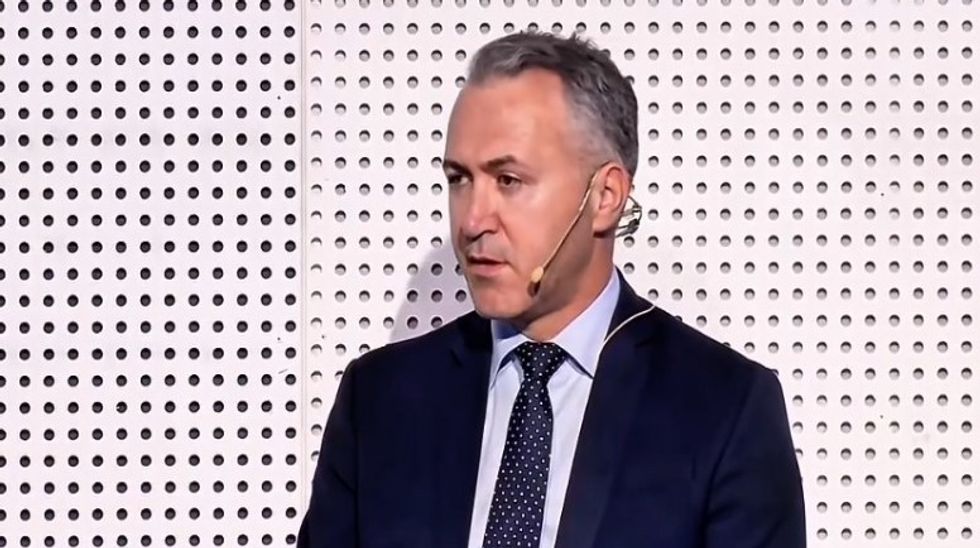
Kosovo’s chief negotiator with the European Union, Jeton Zulfaj, has said that the normalization of relations with Serbia will happen when Serbia becomes, as he put it, a normal state.
Speaking at the “EU Meets the Balkans 5.0” forum in Sofia, Zulfaj said Serbia has not taken responsibility for the crimes committed and continues to glorify them.
“Normalization with Serbia will come when Serbia becomes a normal country. I think it is not yet so,” Zulfaj said.
He mentioned the Kosovo-Serbia dialogue, which began in 2011, as well as the agreements reached over the years, including the Brussels agreement of February 27, 2023 and the annex agreed in Ohrid.
Zulfaj said that after these developments there was, in his words, the aggression in Banjska and the attack on critical infrastructure in Ibër-Lepenc, assessing that these do not constitute the behavior of a state committed to normalization.
“We have a very difficult and aggressive neighbor, which has not taken responsibility for the crimes it committed and, instead, glorifies them, and as we saw, now adores a person who committed genocide. So this is part of the problem in normalizing relations with the neighbor. The dialogue began in 2011, 15 years ago, while in 2012 Serbia received candidate status and then, in 2013, opened membership negotiations. In 2014, it held the first intergovernmental conference without normalizing relations. Normalization requires commitment, but commitment to the reality and values of the EU, which we all want to join,” he said.
According to him, since then there have been around 39 agreements. “The last one is the Brussels one of February 27, 2023, and then we had an annex to that agreement in Ohrid. Then there was a terrorist attack, an aggression by Serbia in Banjska, and later also against our critical infrastructure in Ibër-Lepenc. So this is not the behavior of a neighbor that wants normalization, but of someone who is very committed to obstruction and an aggressive course. But our path toward the EU is that of the rule of law and justice, reforms and economic progress, and this is the path we are following. And in this process, I think it is very important that Serbia does not become a gate for Kosovo. You know, Serbia has 35 chapters and the last chapter is the normalization of relations with Kosovo. So it can be assessed for what it does on the rule of law, justice, democracy, freedom and the protection of rights, and for all of these it can receive a positive assessment if it fulfills them. And only the last chapter would be the one where, given its aggressive stance, it would fail to complete it. While we still do not have any chapter, because we have not opened membership negotiations. Therefore, Kosovo can also have its chapter, while the dialogue develops in parallel,” he said.
Adding that we do not need Serbia to be the gate toward the EU, because the EU is the gate toward the EU.
“And those who do not want to join the EU should not be forced. Membership in the European Union is a voluntary process and a process which, from our perspective, makes our country better, makes our energy cleaner, our environment cleaner, our water cleaner. And better roads and, you know, justice is enforced in the courts, we have the rule of law. This is the kind of membership we want and that we want to build in Kosovo. And I think normalization with Serbia will happen as soon as Serbia becomes normal. And I think it is not yet so. And this is why we should not be held back, because it is not only Kosovo that they are trying to hold back. They are trying to hold back the entire region, because they themselves are not interested in joining. They want partnership with multiple centers, while we are very transatlantic. And I think this is part of the problem in normalization, because they are not living in reality,” he said.

Komentet
Bëhu i pari që komenton!
Lini një Koment të Ri
Për t'u përgjigjur një komenti specifik, kliko butonin 💬 Përgjigju poshtë atij komenti.