
40 Years After Chernobyl, Italy’s Senate Gives Green Light to New Nuclear Energy Law
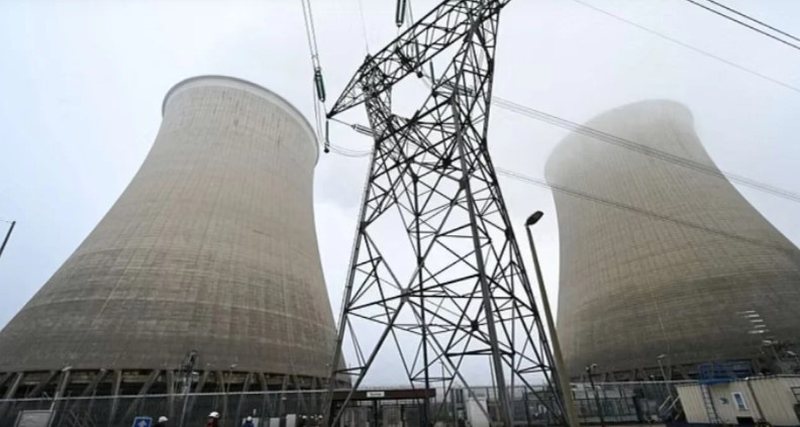
The Italian Senate has definitively approved the nuclear energy bill, known as the “Pichetto Law,” paving the way for the government to draw up a new legal framework for the use of nuclear energy in Italy.
The law passed with 81 votes in favor, 51 against, and seven abstentions. The vote marks an important step in Prime Minister Giorgia Meloni’s government’s efforts to strengthen energy security and meet climate goals. However, the law’s approval does not mean Italy can immediately begin building new reactors.
The bill, previously also approved by the Chamber of Deputies, creates the legal framework for new-generation nuclear technologies. It gives the government 12 months to draft the implementing acts that will define how permits are issued for reactors, safety standards, the management of radioactive waste, and the criteria for selecting sites where plants can be built.
Italy is considering a return to nuclear energy after citizens rejected it twice in referendums: in 1987, after the Chernobyl disaster, and again in 2011, after the accident at Japan’s Fukushima plant.
Italy’s Minister of Environment and Energy Security, Gilberto Pichetto Fratin, called the vote a historic step.
“Nuclear energy is not a return to the past. Used together with renewable energy, it is a technology that can deliver extraordinary results for our energy security,” he said.
Why Italy wants to bring back nuclear energy
The Meloni government argues that rising electricity demand, emissions-reduction targets, and energy security concerns following Russia’s invasion of Ukraine make it necessary to bring nuclear energy back into domestic production.
Instead of building large plants like those of the past, the government is focusing on small modular reactors, known as SMRs, and other advanced technologies. Their supporters say these reactors can be safer, more flexible, and built faster.
The newly approved law does not authorize the construction of any reactor. It sets the rules needed before future projects are proposed, reviewed, and approved.
Italy was once among the pioneering countries of nuclear energy in Europe and had four reactors in operation. The 1987 referendum effectively ended its program. Since then, the country has relied heavily on energy imports and has become one of Europe’s largest consumers of electricity produced by nuclear plants in neighboring countries.
According to the government, demand for electricity could grow significantly in the coming years, as homes, businesses, and transport use more and more electricity. The expansion of data centers and other energy-hungry technologies is also expected to increase consumption.
Italy’s decision comes at a time when Europe is debating more broadly the role of nuclear energy in cutting carbon emissions and dependence on imported fossil fuels. France and Poland are among the countries investing in new nuclear projects or planning to expand them.
Italian public attitudes also seem to have changed. A survey conducted in June 2026 by research company Only Numbers showed that about 55% of Italians support new-generation nuclear plants. Support was stronger among young people, who did not directly experience the Chernobyl disaster.
However, building new reactors faces major obstacles. Italy still has no permanent national repository for the radioactive waste from its previous nuclear program. That waste continues to be stored in temporary facilities in various parts of the country. Future reactor and repository projects are also expected to face opposition from local communities.
Energy analysts have also raised questions about the cost. Building nuclear plants is expensive, and in Europe there are still no small modular reactor projects proven in commercial operation on a large scale. According to industry estimates, a 300-megawatt SMR reactor could cost between 3 and 6 billion euros, not including additional spending on infrastructure and the power grid.
Michele Governatori, senior energy adviser at the climate and energy organization ECCO, welcomed the creation of the regulatory framework but said it could highlight investors’ limited interest in new nuclear projects.
“Having a regulatory framework is positive, but it will also show private investors’ limited interest in technologies that today are either not competitive or not yet ready, such as small modular reactors,” Governatori said.
According to him, Italy should also focus on measures that can be implemented now to lower energy costs and dependence on fossil fuels. He mentioned wider use of electrification, increased energy efficiency, renewables, energy storage capacity, and improvements to the power grid.
Environmental organizations and opposition parties have warned against the government’s plans. Clashes are expected to become more concrete when the sites where reactors could be built and where radioactive waste will be stored are proposed.


Komentet
Bëhu i pari që komenton!
Lini një Koment të Ri
Për t'u përgjigjur një komenti specifik, kliko butonin 💬 Përgjigju poshtë atij komenti.