LVV and LDK suspend talks on Kosovo’s new president
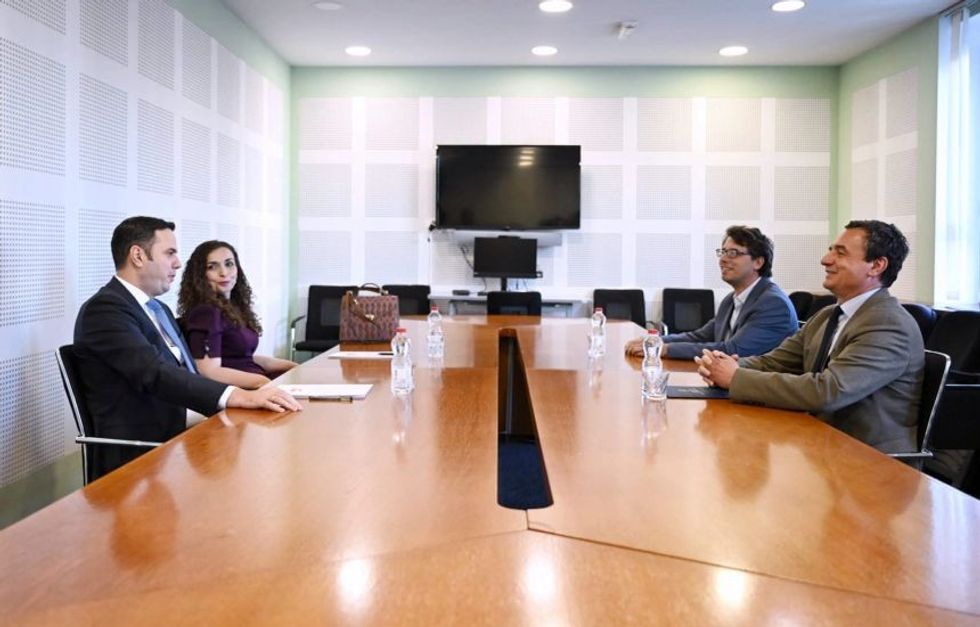
Vetëvendosje (LVV) and the Democratic League of Kosovo (LDK) do not plan to continue talks with each other in the coming days on the issue of Kosovo’s new president, following the withdrawal of Bekim Sejdiu from the candidacy for head of state.
From LDK, the opposition party with 18 seats in the Kosovo Assembly, they do not consider it appropriate to meet on this issue with representatives of the ruling party, LVV, before the Constitutional Court of Kosovo issues a decision on whether the constitution of the 11th legislature took place in line with the Constitution.
“No meetings, without a Constitutional Court decision,” LDK deputy leader Lutfi Haziri told Radio Free Europe briefly on September 15.
The suspension of talks on the president was also confirmed by RFE sources inside LVV, according to which no meeting is planned this week with LDK representatives.
On September 14, the Democratic Party of Kosovo (PDK), the largest opposition entity, sent the Assembly constitution process to the Constitutional Court for review, also asking the Court for an interim measure.
PDK said they complained on Monday about the manner of electing the speaker and deputy speakers of the Assembly, arguing that the government violated the Constitution by disregarding the constitutional deadlines for the process of constituting the legislative body.
According to them, LVV violated the 30-day constitutional deadline for constituting the Assembly, and the procedure for calling sessions every 48 hours until its constitution.
The Constitutional Court told Radio Free Europe on Tuesday that PDK’s request regarding the constitution of the Assembly has been joined with the party’s other request regarding the formation of the Government.
“The joined requests are being processed,” the Constitutional Court’s response reads.
An agreement reached on August 31 between LVV and LDK on nominating Bekim Sejdiu for president ended on September 14, after Sejdiu himself withdrew from the race for head of state, for lack of votes to be elected president.
Six of LDK’s MPs declared against voting for Sejdiu, who, according to Prime Minister Albin Kurti’s statements, had the support of only 74 MPs. For the validity of the presidential vote, the presence of at least 80 MPs in the Assembly hall is required.
“In the circumstances created, characterized by the lack of the necessary parliamentary support for my election as president, and by the deviation of the entire process into the whirlwind of internal political dynamics and clashes, I have decided to withdraw from the candidacy for president of the Republic of Kosovo,” Sejdiu wrote on Facebook on Monday.
After Sejdiu’s withdrawal, another agreement between political parties is needed for the name of the new candidate for president. If the Assembly failed to elect the president, Kosovo would go to new elections — the fourth within two years.
However, political analyst Dritëro Arifi assesses that talks between LVV and LDK should not continue, due to the contestation of the new Assembly, from which the president would be elected.
“I think it would not be good to continue negotiations. What if we go back to square one? Then, everything would be in vain,” Arifi told Radio Free Europe.
“But, if the Constitutional Court finds that the constitution of the Assembly was in line with the laws, he believes the agreement on the president could be reached quickly, if there is will.
“Now we must wait, because if the court’s decision is positive, everything is very simple, everything can be concluded within an hour,” Arifi said.
LVV and LDK — the only party that has agreed to talk with the election winner about an agreement on the president — have not indicated which other names were negotiated before they agreed on Sejdiu’s nomination.
Arifi assesses that, in the current circumstances, whenever LVV and LDK return to negotiations, the candidacy of an LDK MP for president, who is acceptable to all MPs and to LVV, would be the most practical solution to complete the creation of Kosovo’s new institutions.
The 60-day deadline for electing the president has started running from September 13, when the Assembly declared the constitution closed, although Albulena Haxhiu’s mandate as acting president expires on October 4. /REL/

Komentet
Bëhu i pari që komenton!
Lini një Koment të Ri
Për t'u përgjigjur një komenti specifik, kliko butonin 💬 Përgjigju poshtë atij komenti.