
The government sends the “Euro model” for assessment to the European Commission
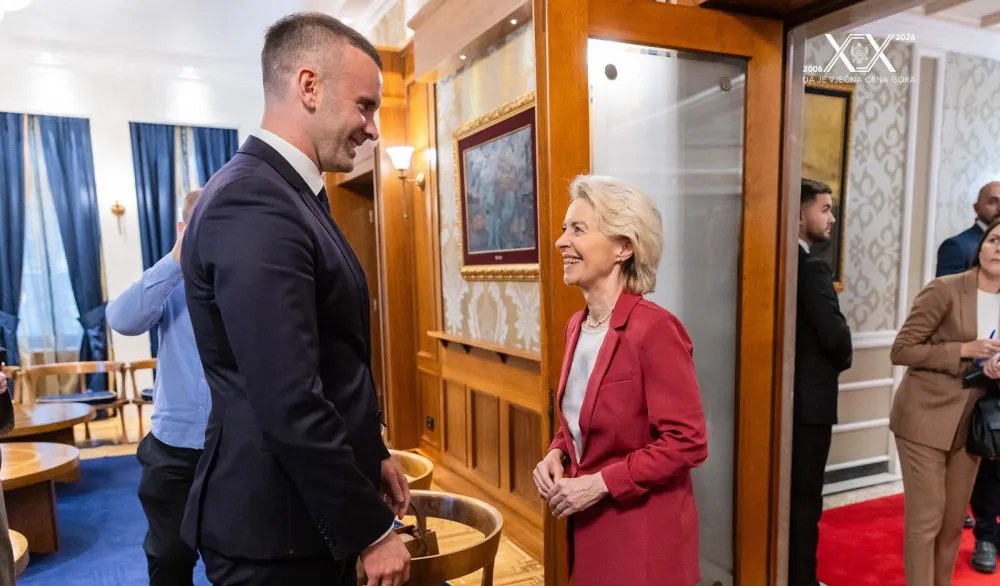
The Government of Montenegro will send to the European Commission for assessment the “Euro model”, the economic programme that Prime Minister Milojko Spajić first presented on September 17 in a video statement. As the Montenegrin newspaper Dan reports, the government confirmed to the newspaper that the programme will be included in Montenegro’s budget for 2027 and in the Economic Reform Programme 2027–2031.
The programme envisages that from January 2027 the net minimum wage will reach 1,000 euros for employees with primary or low education, 1,250 euros for those with secondary education and 1,400 euros for graduates. It includes over 250,000 employees, while the increase will also affect wages above the minimum level. The complete abolition of contributions for pension and disability insurance is envisaged, while pensions will be indexed four times a year starting from 2027, with the minimum pension above 500 euros.
Speaking about the sources of financing, Spajić mentioned increased consumption and employment, the fight against the grey economy, the expected return of the diaspora, spending discipline, new tax measures, more efficient confiscation of assets gained from crime and taxation of empty properties. According to him, the budget deficit in 2027 is expected to be 4–5 percent of GDP, while in 2028 around 3 percent, within the Maastricht criteria.
The programme has also sparked criticism. Economists warn that wage growth must be accompanied by productivity growth, while employers have asked for more details on the implementation dynamics. Some municipalities have warned that higher wage costs could burden their budgets. Meanwhile Finance Minister Novica Vuković has still not given his opinion: he did not vote in the government’s telephone session on the six laws linked to the programme and said he needs more time for analysis.
Economists estimate the gross effect of the programme at around 1 billion euros and the net effect at 500 million euros, which the government must cover through taxes. Abolishing the contributions leaves the state without around 450 million euros in revenue, while some experts also warn of a possible VAT increase.
The European Commission’s assessment is of particular importance, because the Economic Reform Programme contains medium-term macroeconomic projections, public finance plans and structural reforms — and the way the government presents the effects of the “Euro model” will weigh on the assessment of the sustainability of Montenegro’s economic policy.


Komentet
Bëhu i pari që komenton!
Lini një Koment të Ri
Për t'u përgjigjur një komenti specifik, kliko butonin 💬 Përgjigju poshtë atij komenti.