U.S. Congress Puts Kosovo Back in Focus as Washington Reviews Its Balkan Engagement
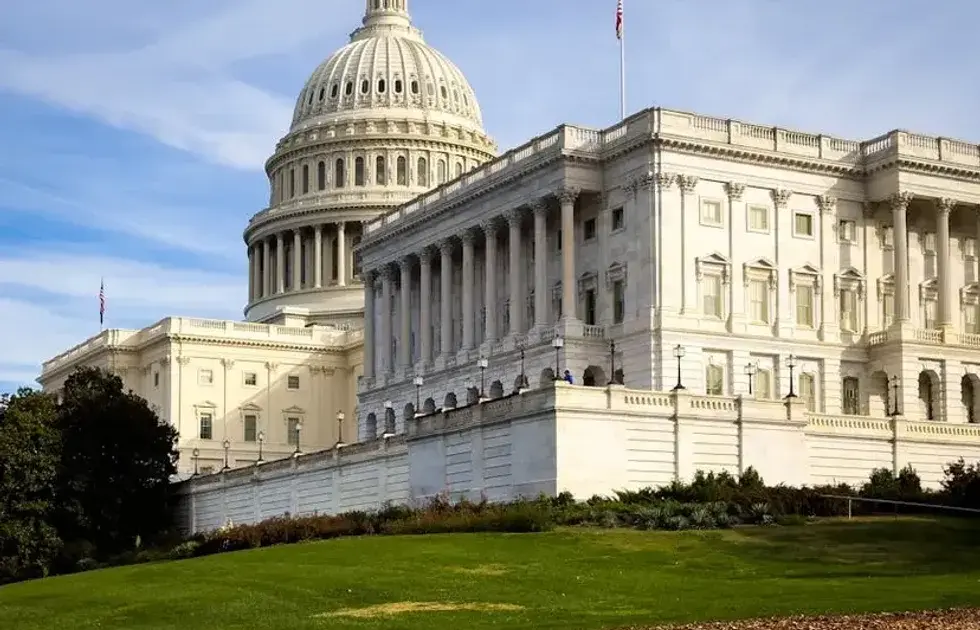
The U.S. Congress will review the United States’ policy toward the Western Balkans on Tuesday.
The House Foreign Affairs Subcommittee on Europe will hold a hearing on September 15, 2026, bringing American engagement in a region Washington considers important for European security back into focus.
Congress warns of Russian and Chinese influence
The National Defense Authorization Act (NDAA) for fiscal year 2026 strengthens the U.S. focus on countering malign Russian and Chinese influence in the Western Balkans.
This shows that, despite discussions of a more limited administration engagement in the region, Congress continues to consider the Western Balkans a space of strategic importance.
The timing of the hearing is also linked to broader concerns about American engagement in Europe, also described in the 2025 U.S. National Security Strategy.
Daniel Lawton of the U.S. Department of State is expected to testify at the hearing, Telegrafi reports.
The House Foreign Affairs Committee is chaired by Republican Brian Mast, while Democrat Bill Keating of Massachusetts is the ranking member of the Europe Subcommittee.
The six Western Balkan states
The Western Balkans include Albania, Kosovo, Bosnia and Herzegovina, Montenegro, North Macedonia, and Serbia.
Three of them — Albania, Montenegro and North Macedonia — are already full NATO members and are advancing in European integration processes and defense modernization.
At the same time, the region is experiencing a growing militarization along the Adriatic coast and ever-deeper integration into NATO’s defense system.
These developments make the Western Balkans an important point in discussions about the European security architecture.
Dodik sanctions removal raises questions in Washington
Another issue that has drawn attention is the U.S. Treasury Department’s decision to lift sanctions on Milorad Dodik and his associates.
Dodik, the former leader of Republika Srpska, has a long history of threats to secede the entity from Bosnia and Herzegovina. For this reason, Washington’s decision to remove the sanctions has sparked criticism and debate over U.S. policy toward political actors in the region.
In the backdrop of recent developments is also the death of Ratko Mladić, the former Bosnian Serb military commander and convicted war criminal, who died around August 27–28, 2026.
U.S. wants Europe to take more responsibility
The U.S. administration has also signaled an approach aimed at reducing direct American security engagements in the Western Balkans and shifting a larger share of responsibility to European partners.
However, this approach comes at a time when several U.S. diplomatic posts in the region remain unfilled.
Despite these developments, the State Department continues to maintain an official stance that includes support for regional stability, the normalization of Kosovo-Serbia relations, coordination with NATO, and countering Russian and Chinese influence.
The Balkans on Congress’s table
The Europe Subcommittee hearing is expected to begin at 2:00 PM on September 15, 2026.
The congressional hearing is expected to serve as an important test of how Washington views the future of its engagement in the Western Balkans — particularly in a period when the region faces changes in European security, geopolitical competition, and efforts for deeper integration into Euro-Atlantic structures.
Source: Telegrafi

Komentet
Bëhu i pari që komenton!
Lini një Koment të Ri
Për t'u përgjigjur një komenti specifik, kliko butonin 💬 Përgjigju poshtë atij komenti.