
Why changing the Law on the Specialist Chambers is difficult, and what impact it could have
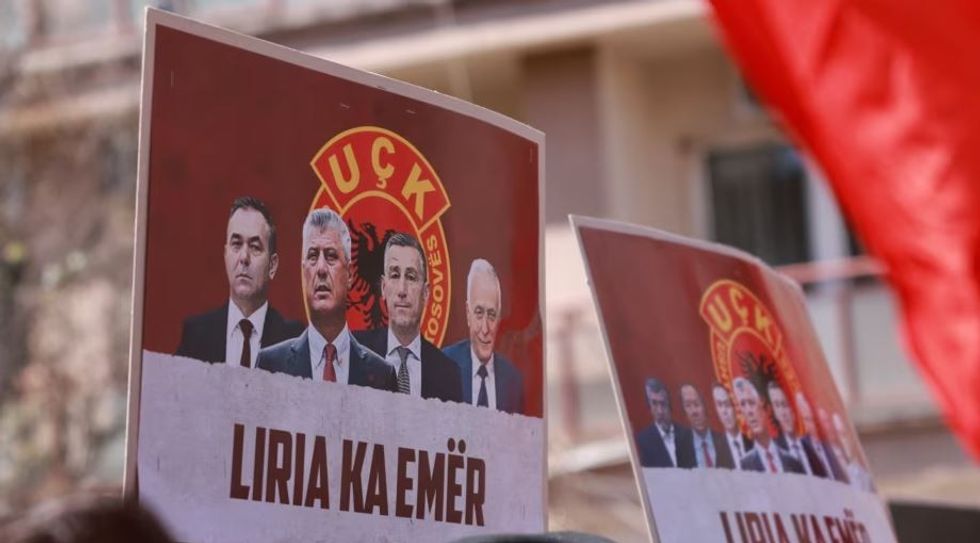
In Kosovo, efforts have grown to change a law on the basis of which the country’s Assembly a decade ago established a court in The Hague, which at first instance convicted four former leaders of the Kosovo Liberation Army (KLA) of war crimes.
But achieving this goal is much harder than it might seem, legal experts warn Radio Free Europe (REL).
The initiative to change the Law on the Kosovo Specialist Chambers in The Hague, which are backed by the European Union (EU), is being reviewed by the legal office of Prime Minister Albin Kurti.
Before it can reach the Assembly of Kosovo for a vote, this initiative of the Democratic Party of Kosovo (PDK), the largest opposition party, must obtain the Government’s consent and pass through the parliamentary committees.
While passing those steps may be easy, the way of arriving at the changes to this law, and their eventual impact afterwards, are what make the matter extremely complicated.
International commitments and the exchange of letters
The deputies of the Assembly of Kosovo have the right and the competence to initiate the supplementation and amendment of the Law on the Specialist Chambers — but, before doing so, they must make sure they do not violate Kosovo’s international commitments, says Ehat Miftaraj, director of the Kosovo Law Institute (KLI).
Miftaraj emphasizes to REL that “changing the law must not infringe the obligations Kosovo has undertaken under Article 162 of the Constitution,” and that “any supplementation-amendment of the law cannot be contrary to the international obligations Kosovo has taken upon itself.”
Through an exchange of letters in April 2014 between the then president of Kosovo, Atifete Jahjaga, and EU chief Catherine Ashton, Kosovo undertook a series of commitments regarding the Specialist Chambers.
The exchange of those letters was essentially the agreement that created what is today known in Kosovo as the Specialist Court.
Among the commitments Kosovo undertook at the time was to consult the EU on any initiative to change laws that affect the court’s mandate, or the judicial procedures arising from the investigations of the Specialist Investigative Task Force (SITF).
Kosovo also committed to the continuation of the work of the Specialist Chambers and the Specialist Prosecutor’s Office until the completion of the relevant investigations and procedures.
Miftaraj says that, for these changes to have impact and be applicable in practice, Kosovo must first cooperate with the main EU Council states or with the United States of America.
The embassies of EU countries in Kosovo did not respond to REL’s questions about this initiative.
Neither the PDK nor the Government of Kosovo have indicated whether they have consulted EU states, or the Specialist Chambers themselves, about the proposed changes.
Prime Minister Kurti, asked about this initiative, said on September 30 that his legal office had received the proposal and was reviewing it, and that it would return an answer to the Assembly later in the week.
“From the information I have so far, also from the relevant ministries, within this week we will have the answer, also as an opinion of the legal office of the Ministry of Justice. Then we will give the answer to the Assembly, and the procedure will continue from there,” Kurti said, without giving further details.
It is not clear whether Kurti, whose party, Vetëvendosje, holds a majority in the Assembly, will support these changes initiated by the PDK.
The Group for Legal and Political Studies (GLPS) did not wish to comment when asked by REL how it would explain the intended changes in legal terms.
“Kosovo cannot change this court”
Ismet Salihu, a now-retired professor of International Criminal Law, tells REL that Kosovo cannot have an impact with such an initiative on the Specialist Chambers in The Hague.
He describes the Specialist Court as a court with the features of an international criminal court, just like any Hague tribunal, and says that Kosovo and its law have no authority over it.
“This court has the competences of an international criminal court, and the only element of Kosovo in this court is that it was established by Kosovo law. Moreover, even this court’s archive will continue to be kept in The Hague; it will not be given to Kosovo,” Salihu emphasizes.
Among the intended changes is also the Specialist Court’s jurisdiction — that is, to drastically narrow its field of action: what it can investigate and try.
It is also requested that cases that would be considered outside its jurisdiction be transferred to the courts and prosecution in Kosovo, and that the parties be able to appeal to the Supreme Court of Kosovo in Prishtina.
And, also, that the maximum sentence become 15 years’ imprisonment, that the sentences be served in Kosovo, and that the president be able to pardon the convicted.
However, each of these changes to the Law on the Specialist Chambers is subject to an assessment of legality by the Specialist Chamber of the Constitutional Court in The Hague, composed of three international judges, who decide exclusively on constitutional referrals relating to the Specialist Chambers and the Specialist Prosecutor’s Office, Miftaraj explains.
REL contacted the Kosovo Specialist Chambers to ask whether they had been consulted about the proposed changes to the law, but by the time this article was published it had received no response.
Miftaraj says it is the Constitutional Court in The Hague, not Kosovo’s in Prishtina, that ultimately decides whether these changes are acceptable or not.
For this, he says, the Assembly of Kosovo has guaranteed, through constitutional amendment 162.
The best example of this is the case of 2020.
At that time, changes to Article 162 of the Constitution were proposed, and the then speaker of the Assembly, Vjosa Osmani, did not send them to the Constitutional Court in Prishtina, but to the Specialist Chamber of the Constitutional Court in The Hague.
The Hague constitutional chamber had concluded that, under Article 162(3), it itself had exclusive jurisdiction to assess the amendments, because they concerned the Specialist Chambers and the Specialist Prosecutor’s Office.
The absence of a reaction from the internationals
The sentencing of former president Hashim Thaçi to 25 years in prison, of former Assembly speaker Jakup Krasniqi to 25, of the other former Assembly speaker Kadri Veseli to 18, and of former MP Rexhep Selimi to 13, has been widely opposed in Kosovo.
All four led the KLA’s war against the occupying Serbian forces in 1998–1999, and are seen as heroes by Kosovo Albanians.
For many Albanians, the court characterized the KLA as a joint criminal enterprise, although the presiding judge himself insisted several times during the pronouncement of the verdict that Thaçi, Krasniqi, Veseli and Selimi were tried and convicted for individual responsibility, and not the KLA’s war for freedom.
The intended changes to this law now come almost a decade after Kosovo had attempted to undo the law entirely.
At that time, foreign embassies in Kosovo, including that of the US, had reacted harshly to that attempt.
Miftaraj says the absence of a reaction from the internationals now to this initiative does not mean Kosovo’s partners have changed their approach to the Specialist Court.
According to him, the goal back then was far more radical than the current initiative.
“Today, almost 10 years on, the PDK’s initiative to change the law and limit the court’s jurisdiction is still at an early stage, and with extremely more limited consequences than the 2017 initiative,” he emphasizes.
“Moreover, at that time the initiative came from the governing coalition partners, with a practical possibility of achieving the goal of abolishing the court, whereas today the ruling party is clearly seen not to support such an initiative. And so the partners too, without seeing any legal effect, may not react the same as 10 years ago,” Miftaraj concludes.
Komentet
Bëhu i pari që komenton!
Lini një Koment të Ri
Për t'u përgjigjur një komenti specifik, kliko butonin 💬 Përgjigju poshtë atij komenti.