
“Basquiat, the Blue Ribbon Paintings, and the Art of Reproduction”: Princeton opens today the exhibition that reveals the master of the copy
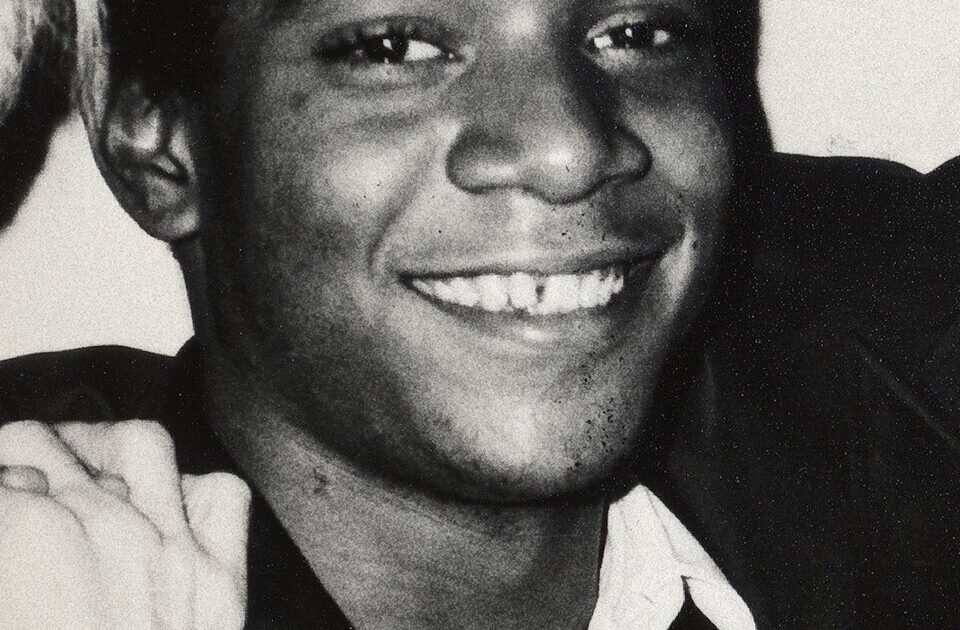
The Princeton University Art Museum opens today to the public the exhibition “Basquiat, the Blue Ribbon Paintings, and the Art of Reproduction”, a new curatorial project that reveals a little-studied dimension of Jean-Michel Basquiat: his passion for reproduction and print media. As the Princeton University Art Museum announces, the exhibition will remain open until 31 January 2027.
At the centre of the exhibition are the eleven “Blue Ribbon” paintings, works of 1984 with densely layered images — anatomical diagrams, film logos, crowned figures and fragments of texts — alongside almost all of the artist’s known graphic projects and prints. Reproduction, for Basquiat, was not merely a mechanical tool: photocopies, prints and transferred images allowed him to move motifs from one work to another, testing the fragile boundary between the original and its echo.
The exhibition reshapes the usual narrative about the artist — as the spontaneous genius of 1980s New York — presenting him as a conceptual artist who understood how images gain authority by being repeated. Curator Jordana Moore Saggese, professor of modern and contemporary art and director of the David C. Driskell Center at the University of Maryland, shows that for Basquiat reproduction also intersected with questions of race and visibility: who is copied into cultural memory and who remains outside its frame.
The exhibition’s dialogue spans generations: from Leonardo da Vinci to Robert Rauschenberg, but also with the pioneering African-American masters of printmaking, such as Bob Blackburn — a line of intergenerational exchange and Black experimentation in reproductive media that is often overshadowed by stories of Basquiat’s meteoric success.
The exclusive preview for museum members was held on Saturday, 3 October, while the public opening is today, Sunday 4 October. The exhibition was made possible with principal support from the Richard C. von Hess Foundation and other donors, as the museum announces.
Komentet
Bëhu i pari që komenton!
Lini një Koment të Ri
Për t'u përgjigjur një komenti specifik, kliko butonin 💬 Përgjigju poshtë atij komenti.