
FOCUS – Strange Modern Structures Discovered Beneath the Arctic
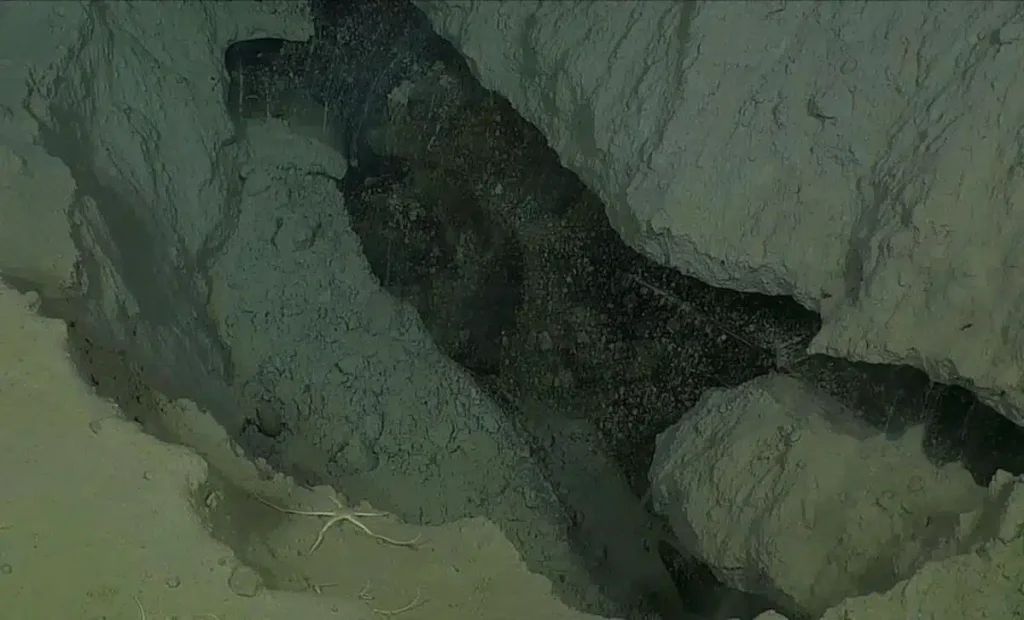
– Scientists have discovered a large number of unusual underwater structures in a remote region of the Arctic, shedding new light on the processes that are constantly reshaping the seabed in this icy region, according to Reuters.
An international team of researchers, led by the Monterey Bay Aquarium Research Institute (MBARI), has identified dozens of giant craters off Canada.
Some of them are larger than a football field, while the largest crater discovered is roughly the size of a city block.
For years, researchers believed these pits were the remains of ancient underwater permafrost, formed at the end of the last ice age, about 11,000 years ago.
But new data show the process is far more active and contemporary.
Between 2010 and 2022, researchers identified 65 new craters on the Arctic seafloor.
To understand their origin, during recent expeditions they used underwater robots to collect ice and sediment samples from inside the craters.
The analyses revealed something surprising: some of the ice was not formed thousands of years ago, but under today’s conditions.
According to the researchers, the process is linked to the thawing of the deeper layers of ancient permafrost beneath the Arctic.
When these layers thaw, slightly salty groundwater forms.
This water moves toward the surface of the seabed and can then penetrate back downward, where it refreezes.
The new ice can remain frozen at temperatures around −1.4 degrees Celsius, until the cycle of melting and refreezing repeats.
So the Arctic seafloor is not a static landscape frozen for thousands of years.
It is a dynamic environment, where ice continues to form and melt, creating large craters and sediment-covered mounds.
“These discoveries overturn our assumptions about underwater permafrost,” said lead author Charlie Paull of MBARI.
According to him, scientists now understand that underwater permafrost may be simultaneously forming and disintegrating near the seafloor.
The discovery could also have practical significance.
Continuous changes to the seabed could affect the planning and safety of underwater infrastructure in the Arctic, including pipelines, cables and other installations.
That is why the researchers are calling for a re-evaluation of how human activity in this region is understood and planned.


Komentet
Bëhu i pari që komenton!
Lini një Koment të Ri
Për t'u përgjigjur një komenti specifik, kliko butonin 💬 Përgjigju poshtë atij komenti.