
“Made in Kosova” products, the first export and EFTA
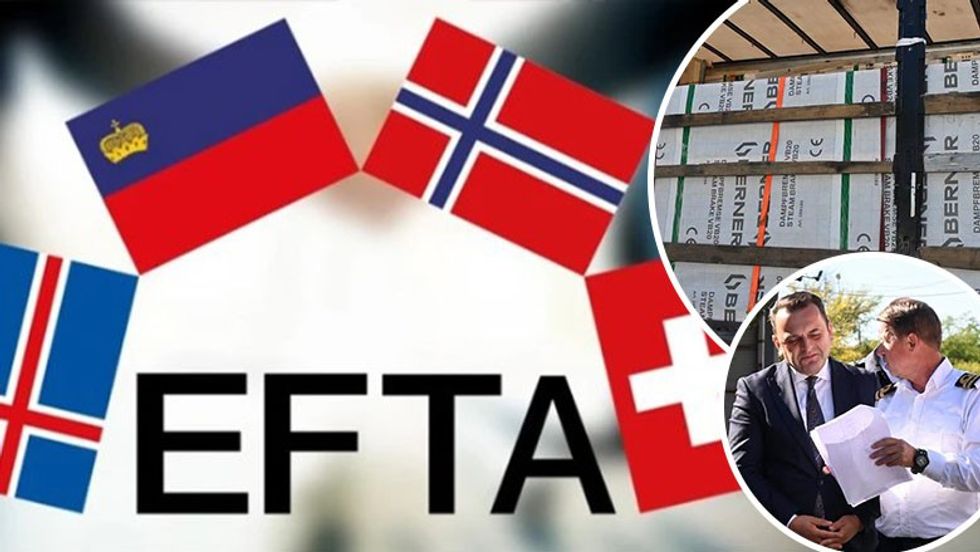
The Free Trade Agreement between Kosovo and EFTA marks an important step in expanding the access of Kosovar businesses to European markets.
Signed on 22 January 2025 in Davos, the agreement includes Iceland, Liechtenstein, Norway and Switzerland and aims to facilitate trade in goods and services, reducing barriers and creating more favourable conditions for exporters and investment.
The entry into force of this agreement is an important step for Kosovo’s economy and especially for local businesses, as it creates new opportunities for increasing exports of goods and services, expanding the presence of Kosovar products in these markets and further strengthening the trade balance with the EFTA states.
The agreement began to be implemented from 1 October 2026.
MINT: the first product from Kosovo departs for export to EFTA markets
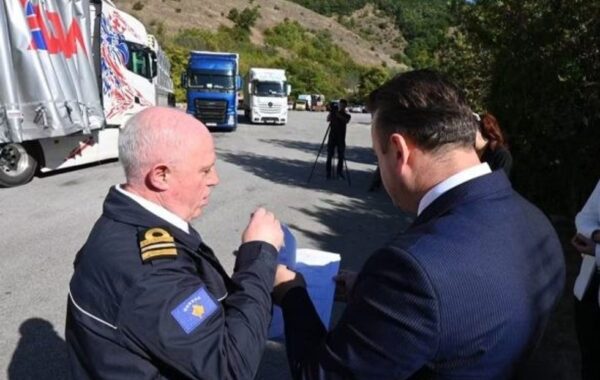
The Ministry of Industry, Entrepreneurship, Trade and Innovation announced in a media statement that, with the start of implementation of the agreement, the first product from Kosovo has now departed from the Dheu i Bardhë border terminal for export to EFTA markets — a modular house from the company Greenhouse.
Deputy Minister of Industry, Entrepreneurship, Trade and Innovation Jeton Mehmeti took part in this event, wishing Kosovar businesses well and expressing the expectation that as many “Made in Kosova” products as possible find a place in EFTA markets, while also creating new partnerships.
For industrial products, Kosovar exporters will benefit from the full liberalisation of customs tariffs, while exports of a considerable number of agricultural products will benefit from reduced or zero tariffs, as well as preferential quotas, in line with the conditions set by each EFTA state.
The agreement also creates opportunities for increasing the export of services, through more favourable market access and facilities provided for this sector.
Iceland, Liechtenstein, Norway and Switzerland are markets with high purchasing power and potential for products and services from Kosovo.
During 2025, Kosovo exported over 100.4 million euros to EFTA countries, while importing around 53 million euros, marking a positive trade balance of 47.4 million euros in Kosovo’s favour. Of total exports to these markets, around 99.4 million euros belong to exports to Switzerland.
OEK: “Made in Kosova” products enter EFTA markets without customs tariffs
The Chamber of Commerce of Kosovo has also announced on this agreement.
The OEK stresses that now “Made in Kosova” products enter EFTA markets without customs tariffs.
“From 1 October 2026, the Free Trade Agreement between Kosovo and EFTA countries — Switzerland, Norway, Iceland and Liechtenstein — has entered into full implementation. The agreement creates new opportunities for Kosovar businesses, facilitating the export of local products to a market of over 15 million consumers with high purchasing power,” the statement says.
In addition to goods, new opportunities are opened for the export of services in ICT, construction and professional services, as well as for investment and new partnerships.
Now, Kosovar businesses have a new opportunity to expand exports, increase competitiveness and strengthen the presence of “Made in Kosova” products in European markets, it adds.
But what is EFTA, which states are part of it and what is its role?
EFTA (European Free Trade Association) is a European economic organisation established to promote free trade and economic cooperation between member states.
It was founded in 1960 by seven states of the time, to promote free trade and economic integration between member states (Austria, Denmark, Norway, Portugal, Sweden, Switzerland and the United Kingdom — they founded EFTA by signing the Stockholm Convention on 4 January 1960).
Today EFTA has 4 member states: Switzerland, Norway, Iceland and Liechtenstein.
Three main functions of EFTA:
It maintains and develops the EFTA Convention, which regulates economic relations between the four member states: Switzerland, Norway, Iceland and Liechtenstein.
It manages the European Economic Area (EEA) Agreement. Through this agreement, three EFTA countries — Iceland, Liechtenstein and Norway — participate in the EU common market, together with EU member states. Switzerland is not part of the EEA.
It develops EFTA’s global network of free trade agreements. So EFTA has trade agreements with various countries and regions around the world. This includes the Free Trade Agreement with Kosovo.
Mission
Thus, the European Free Trade Association (EFTA) is an intergovernmental organisation established to promote free trade and economic integration, for the benefit of the four member states — Iceland, Liechtenstein, Norway and Switzerland — as well as their trade partners worldwide.
The EFTA Council
The EFTA Council is the highest governing body of EFTA. It usually meets seven times a year at ambassador level in Geneva, and once a year at ministerial level in one of the member states, on rotation.
During these meetings, the Council discusses issues related to the EFTA Convention, as well as the development and management of trade relations with third countries, including free trade agreements.
The EFTA Secretariat
The EFTA Secretariat provides member states with high-quality expertise and advice in promoting free trade and economic integration.
With which states does EFTA have free trade agreements?
EFTA has one of the world’s largest networks of free trade agreements, with 31 agreements covering 42 partner countries outside the European Union.
Currently, more than 80% of EFTA’s goods trade is covered by preferential trade agreements. EFTA continues to expand this coverage through new free trade negotiations with various countries.
In addition to free trade agreements, EFTA has signed joint declarations of cooperation with several states. These can serve as a step towards negotiating future free trade agreements.
Kosovo and EFTA
Kosovo signed a Free Trade Agreement with the states of the European Free Trade Association (EFTA), which include Iceland, Liechtenstein, Norway and Switzerland, in January 2025.
At the signing ceremony in Davos, Switzerland, EFTA members and Kosovo Prime Minister Albin Kurti stressed that this agreement would bring mutual benefits, as Telegrafi reports.
Komentet
Bëhu i pari që komenton!
Lini një Koment të Ri
Për t'u përgjigjur një komenti specifik, kliko butonin 💬 Përgjigju poshtë atij komenti.