
New cancer discovery: protein that “exhausts” immune cells identified
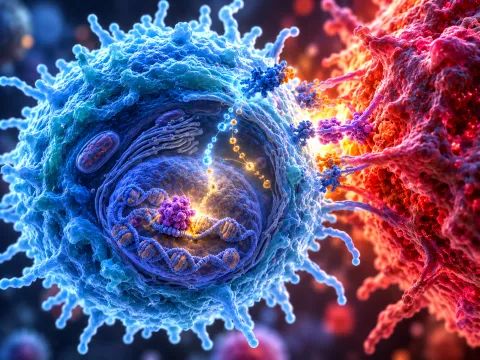
– A team of researchers at St. Jude Children’s Research Hospital has identified a protein that may play a role in the gradual weakening of T lymphocytes’ ability to fight tumor and infected cells during prolonged exposure, writes mondosanita.it.
The protein, called ZMYND8, acts in CD8+ T lymphocytes, an important component of the immune system.
When these cells face the same target for weeks or months, as happens in some types of cancer and chronic infections, they can gradually lose the ability to multiply and to attack effectively.
This process is known in immunology as T-lymphocyte “exhaustion”.
The study, published on September 23 in the scientific journal Nature, suggests that ZMYND8 may be one of the factors contributing to this process.
To identify the protein, the researchers analyzed dozens of epigenetic factors, through CRISPR techniques developed in biological models and analyzed at the level of individual cells.
When ZMYND8 was eliminated from T lymphocytes, the researchers noticed a lower tendency of the cells to move into the final phase of exhaustion.
At the same time, the presence of cells with “effector” characteristics increased — cells more ready to perform their protective function.
Experiments with human cells also gave results in the same direction. CD8+ T lymphocytes cultured in the laboratory showed that, during chronic stimulation, ZMYND8 levels increased.
The elimination of the protein was accompanied by the strengthening of a mechanism linked to IL-2 and STAT5, which helps maintain and function T lymphocytes.
The researchers also analyzed data from patients with melanoma and HIV. Higher ZMYND8 activity was linked to cell profiles characterized by T-lymphocyte exhaustion.
However, the authors stress that these results do not yet constitute a treatment for patients.
There is currently no approved therapy targeting ZMYND8 and it is not yet known whether blocking this protein will be safe and effective in humans.
Further studies are needed to determine whether the mechanism also works in other types of tumors and chronic infections, and to find ways to intervene in as controlled a manner as possible.
The researchers also warn that systemic use of IL-2 can cause significant toxicity.
For this reason, the discovery of ZMYND8 should be seen as the identification of a possible target for future research, not as the discovery of a ready-made drug against cancer.
The next step for scientists is to determine whether this mechanism can be exploited selectively, strengthening the immune response against the tumor without causing unwanted damage to other parts of the immune system.
Source: mondosanita.it



Komentet
Bëhu i pari që komenton!
Lini një Koment të Ri
Për t'u përgjigjur një komenti specifik, kliko butonin 💬 Përgjigju poshtë atij komenti.